Jordan Carter · 2 November 2026
Election Poll Movements and Their Effects on the Digital Markets Act Alongside ASEAN Trade Talks
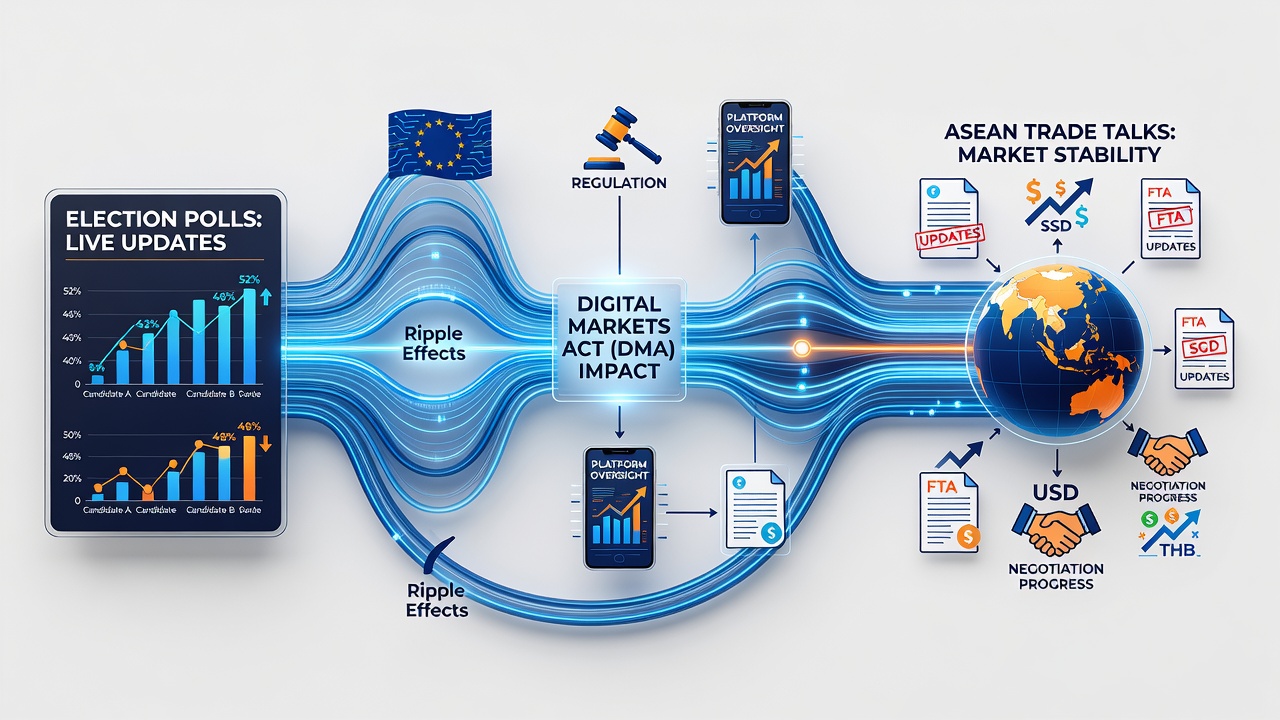
Election polling data continues to shape policy timelines across multiple regions, and observers note direct connections to the Digital Markets Act enforcement schedules in the European Union as well as ongoing ASEAN trade negotiations. Researchers track shifts in voter sentiment through regular surveys, and those patterns often prompt adjustments in regulatory priorities while trade delegations recalibrate their positions ahead of key meetings. Data from national polling agencies shows that fluctuations in support for major parties correlate with changes in legislative calendars, and this linkage becomes particularly visible when digital market rules intersect with cross-border data flow provisions in ASEAN agreements.
Analysts at various think tanks compile polling aggregates that highlight regional variations, and these aggregates reveal how expectations around upcoming votes influence the pace of compliance deadlines under the Digital Markets Act. European Commission documents outline gatekeeper designations that remain subject to review periods, and those periods align with national election cycles in several member states. Meanwhile, ASEAN secretariat reports indicate that trade ministers reference similar polling trends when discussing data localization requirements and digital economy chapters in bilateral pacts scheduled for finalization phases.
Polling Patterns and Regulatory Timelines
Multiple polling organizations release weekly updates that capture swings in public opinion on economic issues, and these updates feed into assessments of how stable certain policy frameworks remain. In the context of the Digital Markets Act, shifts detected in late 2025 polls prompted several gatekeeper companies to accelerate submission of compliance reports ahead of anticipated parliamentary debates. Observers note that when polls indicate stronger support for stricter competition measures, enforcement bodies advance their investigation schedules accordingly.
Trade negotiators from ASEAN member states monitor these same European trends because digital services chapters in upcoming agreements depend on predictable regulatory environments. A report from the Australian Department of Foreign Affairs and Trade details how data exchange rules in regional pacts reference EU standards, and polling volatility in Europe creates uncertainty that delays final text agreements. Figures from ASEAN economic community meetings show that sessions dedicated to digital trade have been extended when external regulatory signals appear inconsistent.
Connections Between DMA Enforcement and ASEAN Discussions

Gatekeeper obligations under the Digital Markets Act require interoperability commitments that directly overlap with data portability clauses in ASEAN trade frameworks. Studies from research institutions in Singapore and Brussels demonstrate that when election polls project changes in ruling coalitions, both the European Commission and ASEAN working groups adjust their consultation calendars. These adjustments appear in official schedules released through government portals, and they affect timelines for technical workshops on cross-border data transfers.
November 2026 has been flagged in several diplomatic calendars as a period when multiple ASEAN bilateral talks reach advanced stages, and analysts connect this timing to polling cycles in key European economies. When polls stabilize around moderate positions on digital regulation, negotiators report smoother progress on mutual recognition arrangements. European Commission updates on Digital Markets Act implementation show that designation decisions scheduled for late 2026 remain contingent on sustained policy continuity following national votes.
Case Examples from Recent Cycles
One documented instance involved polling surges in early 2025 that aligned with accelerated review processes for certain digital platforms, and those reviews influenced ASEAN positions during data governance roundtables held in Kuala Lumpur. Trade officials cited the need for alignment with evolving EU rules when drafting model contract clauses. Another case tracked through academic papers from Canadian universities illustrated how consistent polling data on consumer protection priorities led to parallel language appearing in both Digital Markets Act guidance and ASEAN digital economy framework annexes.
Industry associations representing technology firms have submitted position papers that reference polling averages from multiple countries, and these submissions feed into both EU consultation portals and ASEAN economic ministers' preparatory documents. The pattern shows that stable poll numbers tend to shorten negotiation windows, whereas volatile readings extend them by several months.
Conclusion
Tracking mechanisms for election polls now include dedicated modules that flag implications for both Digital Markets Act milestones and ASEAN trade negotiation rounds. Government databases and academic repositories compile these linkages into accessible formats, and practitioners in regulatory affairs rely on them to anticipate schedule revisions. Data released through official channels continues to illustrate the interconnected nature of these policy areas as November 2026 approaches.